
The Learning Lounge
The Learning Lounge features discussions of educational topics through an interdisciplinary lens. Professionals from a variety of roles open up in this "coffee chat" about topics shaping the work of school interpreters. The videos were used as content throughout the School Interpreting Series curriculum.
The Learning Lounge Collection
The Learning Lounge videos are available below, organized by each professional's last name. Each profile includes a brief bio and a collection of their videos.
-
Ms. Kate Beilmann - Former Lead School Interpreter & Academic Advisor
-
Videos forthcoming!
-
Ms. Jo Brown - Assistant Coordinator of Deaf Educational Services, Interpreter Coordinator, & School Interpreter
-
Systems Thinking Overview
-
Systems Thinking in Application
-
Mr. Whit Darnell - Security Risk Management Advisor
-
Safety and Security
-
Preparation for Safety and Security Concerns
-
Dr. Emily Girardin - School Interpreter, Interpreter Educator, & Director of the PSI Project
-
Language Modeling in Schools
-
School Interpreters Role in Language Modeling
-
Language Modeling - Not a One Size Fits All Approach
-
Dr. Cheryl DeConde Johnson - Educational Consultant & Advocate
-
The PARC and Collaboration
-
Schools & Acoustics
-
Dr. Leilani Johnson - Architect of the UNC ASL & Interpreting Studies Department, Director Emerita, & Author
-
Introducing the Compexities...Book
-
The Current State of School Interpreting
-
Systems Thinking & Systems Failure
-
Individual Accountability as School Interpreters
-
Mr. Dan Lasher - Interpreter & Former Teacher
-
Atypical Language & Language Dysfluency
-
Tools to Investigate Patterns in Language Observed
-
Language Model from a New Perspective
-
What I Wish I Knew When I Started in the Field
-
Dr. Dominique Marinello - Educational Therapist
-
Learning and Learning Theories
-
The Embodied Approach to Learning
-
Takeaways for Future School Professionals
-
Ms. Shannon Townsend - Interpreter, Coach, & Facilitator
-
Defining and Using Manipulatives
-
Collaborating with Manipulatives
-
The Power of "And"
-
Collaboration Through "And"
The full Learning Lounge series is also available as a playlist on the PSI YouTube channel.
The Learning Lounge collection is presented in spoken English, reflecting the interdisciplinary nature of education professionals. For accessibility, videos are hosted in the Smart Player, which the Disability Resource Center at the University of Northern Colorado set up. Links to the Smart Player versions are provided, offering captions, transcripts, and flexible playback options.
Ms. Jo Brown - Coordinator & School Interpreter

Jo Brown is the Assistant Coordinator of Deaf Educational Services and the coordinator of Interpreting Services for St. Tammany Parish Schools. Before assuming coordinator responsibilities, Ms. Brown was an educational interpreter for St. Tammany Parish Schools for 25 years. She has worked with practicum students from the University of Northern Colorado and Delgado Community College and is a mentor as part of her job responsibilities. Ms. Brown has also worked as a community interpreter.
Ms. Brown is a founding member of the National Association of Interpreters in Education (NAIE) and a former board member. She has served on various local, state, and national boards/committees for over 12 years. Ms. Brown has conducted extensive
research on the roles and responsibilities of educational interpreters and on the use of a systems-thinking approach in the school system. She is an EIPA written and performance test proctor.
Education: Bachelor’s degree in ASL/ English Interpreting from the University of Northern Colorado, and has a certificate in Interpreter Supervision and Leadership.
Credentials: EIPA 3.9; holds an ancillary certification as a Louisiana Qualified Educational Interpreter
Systems Thinking Overview
Explains how applying a systems thinking lens helps interpreters understand larger structures, reduce frustration, and create meaningful, long-term change rather than short-term fixes.
Systems Thinking in Application
Uses a systems thinking lens to show how interpreters can respond to role confusion by centering student access, preserving relationships, and offering solutions rather than simply refusing.
Mr. Whit Darnell - Security Risk Management Advisor
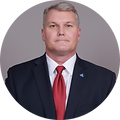
Whit Darnell is a Senior Consultant and principal security risk management advisor for TorchStone Global. Mr. Darnell had a distinguished twenty-five-year career with the FBI, where he served in a variety of investigative, executive protection, training, and security leadership roles, including Unit Chief of the FBI’s Hostage and Rescue Team.
Mr. Darnell has extensive experience in developing comprehensive security programs, identifying and mitigating risks, and responding to crises in both the public and private sectors. Examples of his experience include security planning for major speaking events and conferences attended by VIPs, U.S. presidential candidates, and senior U.S. government cabinet-level
officials. His expertise also extends to the sporting world, and he has worked closely with the Special Events Division at the Metropolitan Nashville Police Department to safely plan and deliver events such as the NCAA College Football’s Music City Bowl, Tennessee Titans’ football games, and the Nashville Predators hockey games.
Since entering the private sector, Mr. Darnell has been Director of Security for a high-net-worth client, managing and sourcing a team of 24 executive protection personnel on a 24/7, 365-day-a-year basis. In this role, he was responsible for overseeing and managing threat identification and mitigation, strategic planning and analysis, incident management and response, training & skill development, and external liaison.
Education: FBI Training Academy, Tennessee Bureau of Investigation Training Academy, Bachelor of Science in History, minor in Business
Credentials: FBI - HR 218 LEOSA Certification, FBI SWAT, FBI Hostage Rescue, National Crisis Negotiator, Personal Protection Specialist, Emergency Medical Technician, Tactical & Defensive Tactics Instructor, Firearms Instructor, and numerous other certificates that represent the highest level of achievement in law enforcement
Safety and Security
Outlines a layered approach to school safety—education, drills, environmental awareness, and communication—emphasizing preparedness and situational decision-making in emergencies.
Preparation for Safety and Security Concerns
Emphasizes using mental rehearsal, basic training, and repeated practice to build preparedness for emergency situations and improve decision-making under stress.
Dr. Emily Girardin - Interpreter, Educator, & Grant Director

Dr. Emily Girardin is an interpreter, educator, and co-director of the Preparing School Interpreters (PSI) Project (OSEP: H325K2100024, 2021-2026) at the University of Northern Colorado. She uses her knowledge and skills, gained over decades of interpreting and leadership experience, to support interpreting students as they begin school interpreting. Emily's dissertation – American Sign Language Fluency: A Foundational Competency for Future School Interpreters – examined pre-service preparation for school interpreters, aiming to improve the quality of interpreting services for deaf and hard of hearing students.
Education: Doctor of Education (EdD) with a specialization in Mind, Brain and Teaching from Johns Hopkins University
Credentials: Ed:K-12 from the Registry of Interpreters for the Deaf
Language Modeling in Schools
Highlights how all adults in schools model language and use intentional language modeling to support students’ communication development.
School Interpreters Role in Language Modeling
Emphasizes that school interpreters must have strong ASL fluency and intentionally engage in language modeling, interaction, and scaffolding to effectively support deaf students’ language development.
Language Modeling - Not a One Size Fits All
Illustrates how language modeling varies across contexts, using examples to show how intentional exposure to rich, diverse language supports students’ communication development and connection to the Deaf community.
Dr. Katrine Gosselin - Special Education Educator

Dr. Katrine Gosselin's (pronounced Katrina) passion for special education and teaching is apparent to anyone who walks into her space, where an abundance of books and autism resources line her shelves. She entered the field of special education to make a difference. Dr. Gosselin has a passion for learning and for ensuring that all children have access to strong instruction. She believes that every child is a learner and should have the right to achieve whatever they want.
Throughout her years as a teacher, she has been told that many of the students she worked with “can’t do it” or “will never be able to learn things.” These words have lit a fire within her. Because of these words, Dr. Gosselin has worked hard to secure any
any necessary resources and has done everything she can to ensure all children have their right to an education. Continuing her passion for advancing special education and mentoring the next generation of educators, Gosselin is now a professor in the Special Education program at the University of Northern Colorado, where she shares her expertise with individuals with significant support needs and autism.
Education: Ph.D. Special Education, University of Northern Colorado; M.A. Special Education, University of Northern Colorado; B.S. Human Development and Family Studies, Colorado State University
Words Matter
Highlights how deficit-based labels (e.g., “sped kids”) in professional conversations can unintentionally dehumanize students, emphasizing the importance of person-first language and truly knowing individuals beyond their services.
Smart Player is unavailable for this Learning Lounge.
Showing Up
Shows how high expectations and the celebration of student milestones can drive meaningful outcomes and renew purpose.
Smart Player is unavailable for this Learning Lounge.
Dr. Cheryl DeConde Johnson - Educational Consultant & Advocate

Cheryl DeConde Johnson is an educational consultant and advocate for deaf and hard of hearing children through her practice the ADEvantage, audiology - deaf education vantage consulting. She is also an Adjunct Assistant Professor at the University of Arizona, College of Education. Cheryl is co-author of the Educational Audiology Handbook, a past president and member of the Educational Audiology Association and co-founder and member of Hands & Voices, a parent-driven organization supporting families of deaf and hard of hearing children.
Dr. Johnson’s special interests include promoting outcomes for all children who are deaf and hard of hearing, communication access, and family involvement. Drawing on her experience raising a daughter with limited hearing, she enjoys assisting families facing similar issues and challenges. She is a frequent presenter nationally and internationally on topics related to audiology and management issues in school settings for children and youth who are deaf and hard of hearing, as well as various topics in deaf education. Dr. Johnson has received numerous awards and recognitions for her work, including the 2006 Trailblazer Award by the Alumni Association of the University of Northern Colorado, Phonak’s establishment of the Cheryl DeConde Johnson Award for Excellence in Educational Audiology, and the Colorado Hands & Voices Families First Award.
Education: Doctor of Education (EdD) in Special Education Administration: Audiology and Deaf Education Programs from University of Northern Colorado
The PARC and Collaboration
Examines how placement and readiness tools support intentional decision-making by aligning student needs with appropriate learning environments and services.
Schools & Acoustics
Explains how classroom acoustics—noise, reverberation, and fatigue—impact student access and interpreter effectiveness, highlighting the need for environmental awareness and strategic accommodations.
Dr. Leilani Johnson - Director Emerita & Author

Dr. Leilani J. Johnson was the architect and director of the DO IT Center, now the University of Northern Colorado, Department of ASL & Interpreting Studies which serves residential and distance students in programs that include ASL for Liberal Arts, an ASL Minor, a BA in ASL-English Interpretation, and an MA in Teaching ASL, along with professional development offerings.
Since 1993, Dr. Johnson has been awarded approximately $25M in federal grants and partnership contracts. She was the Principal Investigator for the OSEP award that originally supported the studies included in the book - Complexities in Educational Interpreting: An Investigation into Patterns of Practice (2023). She is the current Principal Investigator on the OSEP-
funded the Preparing School Interpreters Project and the RSA-funded Improving Rural Interpreter Skills Project.
Holding RID certification since 1983, she is a recognized author and presenter at state, regional, national, and international conferences. Her recent research projects have focused on educational interpreting, state employment standards for educational interpreters, and two- to four-year articulation models. In 2016, Dr. Johnson was honored with a perpetual award instituted by the National Association of Interpreters in Education, the Leilani J. Johnson Leadership Award, and in 2018, she was designated as Department of ASL & Interpreting Studies Director Emerita at the University of Northern Colorado.
Education: Doctor of Education (EdD) in Instructional Technology and Distance Education from Nova Southeastern University
Credentials: IC/TC and CI from the Registry of Interpreters for the Deaf
Introducing the Complexities...Book
Provides background on the research and collaboration that led to Patterns of Practice, highlighting efforts to identify the knowledge and skills needed for effective school interpreting.
Systems Thinking & Systems Failure
Describes how systemic gaps across federal, state, and educational institutions contribute to inconsistent standards and inadequate preparation of school interpreters.
The Current State of School Interpreting
Argues that many deaf students lack qualified interpreters and outlines four essential foundations—education, credentials, ongoing learning, and accountability—needed for effective school interpreting.
Individual Accountability as School Interpreters
Emphasizes that, amid systemic gaps, interpreters must take personal responsibility for maintaining qualifications, continuing growth, and actively contributing to the educational team to ensure student access.
Mr. Dan Lasher - Interpreter & Former Teacher

Dan Lasher is an investigator at heart, desiring to expand his understanding of the human experience. As a result, interpreting was a natural fit. Mr. Lasher has several decades under his belt working with Deaf people, and as a community interpreter for nearly twenty years, he consistently has more questions and curiosities than answers. Mr. Lasher has a passion to discuss profound ideas related to humanity, language, and evolution, with practitioners of all professions.
Mr. Lasher has a strong background in STEM. He is a former paramedic / firefighter and current CPR instructor; a former science teacher for both hearing and deaf students in Northern Virginia and at the Model Secondary School for the Deaf; and has
extensively researched the legal ramifications of energy policy on human progress. Personally, Mr. Lasher likes to spend time with his two children, watching them succeed and fail at becoming decent humans.
Education: BS: Chemistry, James Madison University (1999); AAS: Sign Language Interpreting, Front Range Community College (2006), MS: Environmental Policy, Management and Law, University of Colorado Denver (2010)
Credentials: NIC from the Registry of Interpreters for the Deaf
Atypical Language & Language Dysfluency
Clarifies that atypical language is a broad, contextual variation while dysfluency reflects errors, urging interpreters to view breakdowns as opportunities to investigate and improve their own skills rather than label others.
Language Model from a New Perspective
Argues that unqualified interpreters as primary language models can harm deaf children’s language development, emphasizing the need for fluent models and greater access to Deaf community representation.
Tools to Investigate Patterns in Language Observed
Encourages practitioners to improve by focusing on one skill at a time, using reflective inquiry, research, and communities of learning to support meaningful professional growth.
What I Wish I Knew When I Started in the Field
Warns that taking assignments beyond one’s competence can harm deaf individuals, urging interpreters to exercise professional judgment, set boundaries, and say no when they are not the right fit.
Dr. Dominique Marinello - Educational Therapist

Dr. Dominique Marinello, an educational therapist based in California, works alongside neurodivergent K-college students (e.g., autistic, dyslexic, ADD/ADHD, students with processing differences) to help discover their academic strengths and identify strategies to improve in areas of struggle. She blends the fields of education and psychology to understand individual differences in learning better and tailor an individualized approach for each learner. Dr. Marinello consults with parents and fellow educators on best practices for affirming and supporting neurodivergent students.
Education: Doctor of Education (EdD) with a specialization in Mind, Brain and Teaching from Johns Hopkins University & Master of Science in Psychology from Arizona State University
Learning and Learning Theories
Explores how learning theories explain change in learners and inform strategies to support diverse student needs.
The Embodied Approach to Learning
Examines how an embodied approach to learning expands educational support by engaging the body, environment, and individual differences in how students learn.
Takeaways for Future School Professionals
Emphasizes the importance of recognizing learner variability and tailoring instruction to align with each student’s unique needs and experiences.
Ms. Shannon Townsend - Interpreter, Coach, & Facilitator

Shannon Townsend is an interpreter with a wealth of experience across educational and community settings. Shannon uses these experiences to support her passion for facilitating learning, especially by creating a welcoming, safe, and growth-mindset space for school interpreters. Communication styles, the inner workings of the interpreter's mind, and a heart for school interpreters are what drive Ms. Townsend to create and hold space for interpreters (of all walks of life) to be open, honest, and vulnerable. She has spent several years honing her skills as a Coach and workshop facilitator.
Education: Bachelor's of Communication: Community Interpreting from Regis University
Credentials: EIPA 3.9; NIC from the Registry of Interpreters for the Deaf
Defining and Using Manipulatives
Explores how manipulatives support learning by making concepts visible, reducing language demands, and empowering students to engage more independently.
Collaborating with Manipulatives
Examines how pairing manipulatives with language and symbols supports both conceptual understanding and students’ ability to express that knowledge in academic contexts.
The Power of "And"
Reflects on using “and” instead of “but” to keep feedback collaborative, affirming, and growth-oriented in interpreting practice and professional relationships.
Collaboration Through "And"
Highlights how intentionally modeling “and” language in schools can shift communication norms, foster clarity and a growth mindset, and create ripple effects across students and teams.